Booking choice: The My Tho and Ben Tre day with islands, a sampan and coconut candy, with free cancellation up to 24 hours before. Book this Compare the options below
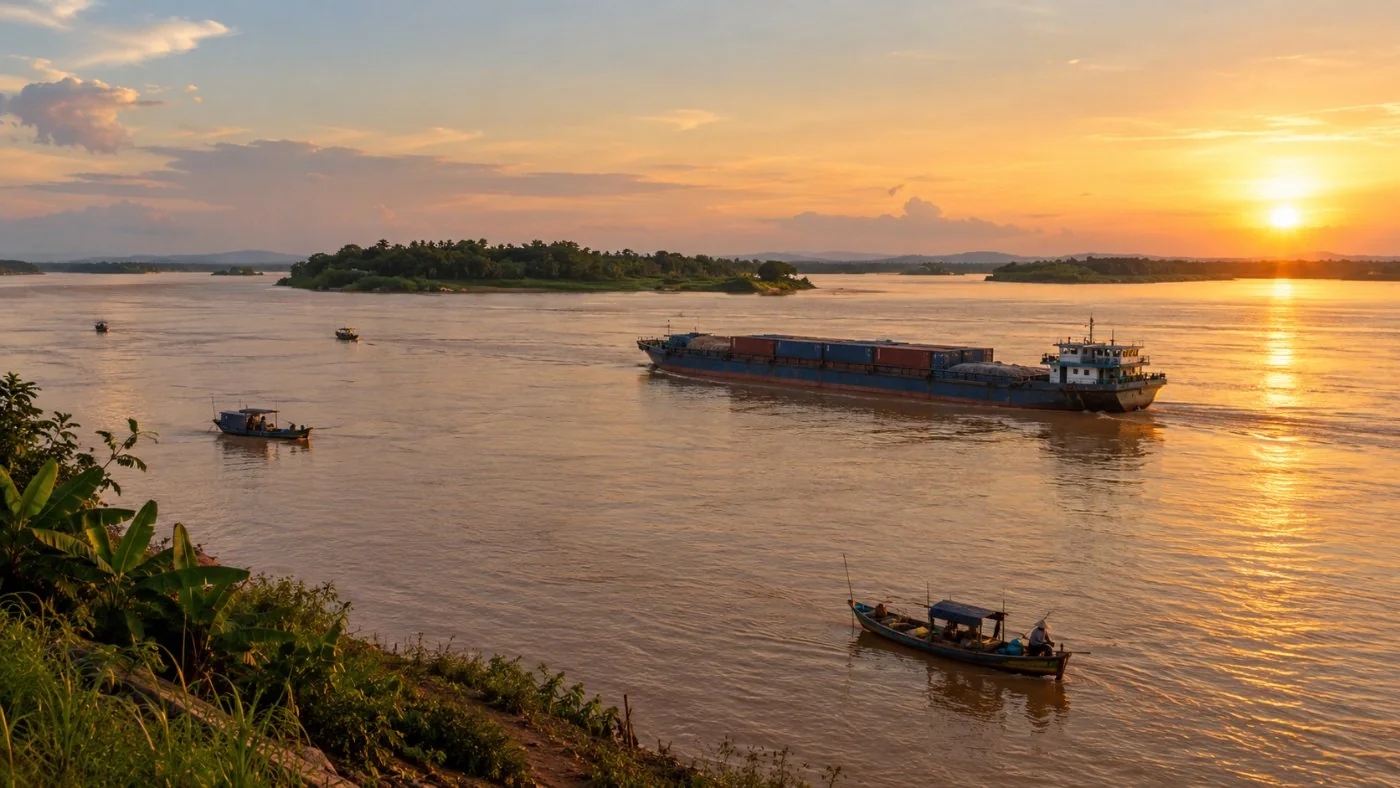
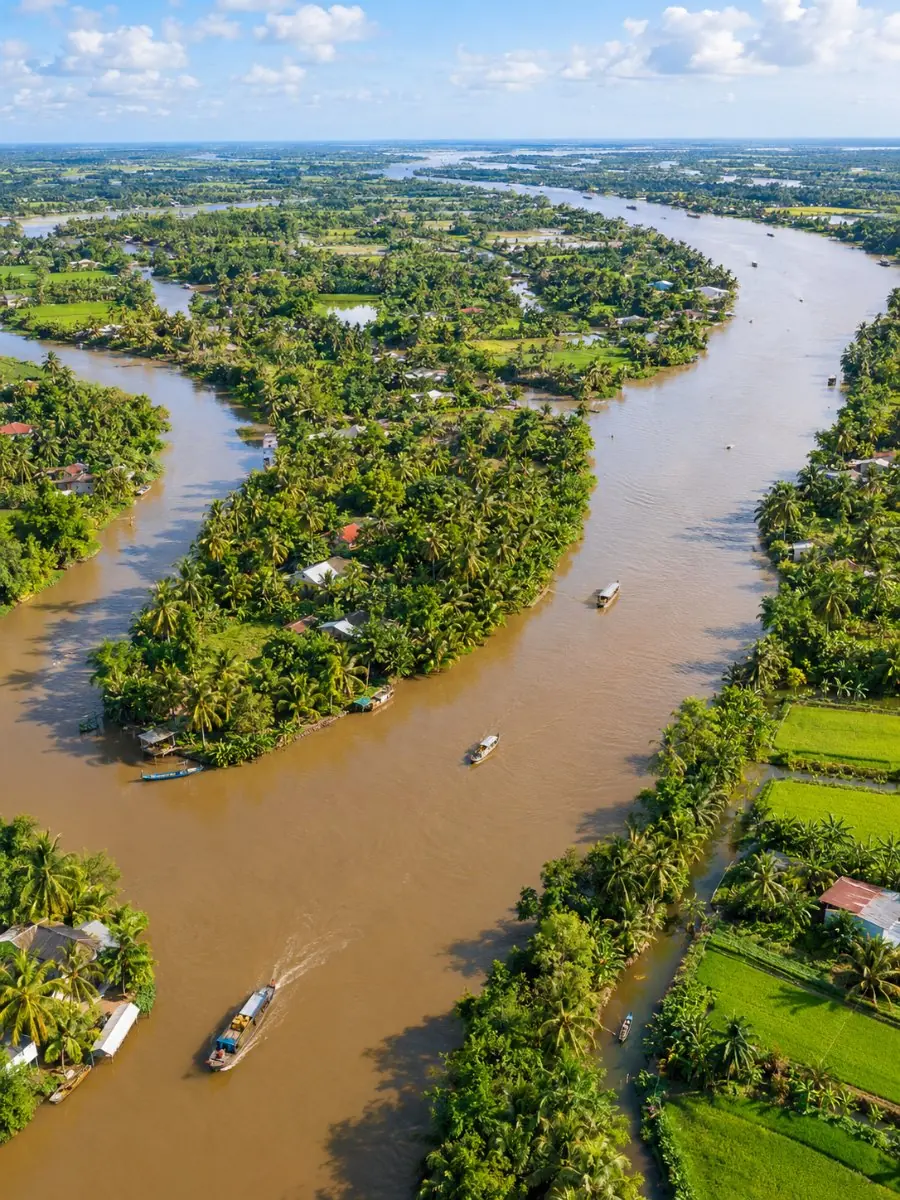
The Mekong rises on the Tibetan Plateau and runs through six countries before it fans out into the delta in southern Vietnam and reaches the South China Sea. The delta is where most visitors meet it.
This guide gathers the facts behind the most common questions and links them to what you will actually see on a tour.
The quick answer
The Mekong is about 4,350 km long, the world's twelfth-longest river and the third-longest in Asia, flowing through China, Myanmar, Laos, Thailand, Cambodia and Vietnam. Its name comes from Thai and Lao Mae Nam Khong, roughly 'mother of waters'; the Vietnamese call it Cuu Long, Nine Dragons, after the delta's branches. It is not a swimming river, and you will not meet a wild crocodile on a tour.
Is the Mekong the longest river in the world?
No. At about 4,350 km it is the world's twelfth-longest river and the third-longest in Asia.
The Nile and the Amazon are far longer, and in Asia the Yangtze and the Yellow River outrun it. The Mekong's distinction is the number of countries it links, six, and the size of the delta it builds at its mouth.
What does the word Mekong mean?
It comes from Thai and Lao Mae Nam Khong: mae nam means roughly 'mother of waters', and khong is an old word for river.
In Vietnam the river is Song Cuu Long, the River of Nine Dragons, after the branches it splits into across the delta. Names such as the Hau River at Can Tho and the Tien River at My Tho belong to those branches.
Why is the Mekong Delta so famous?
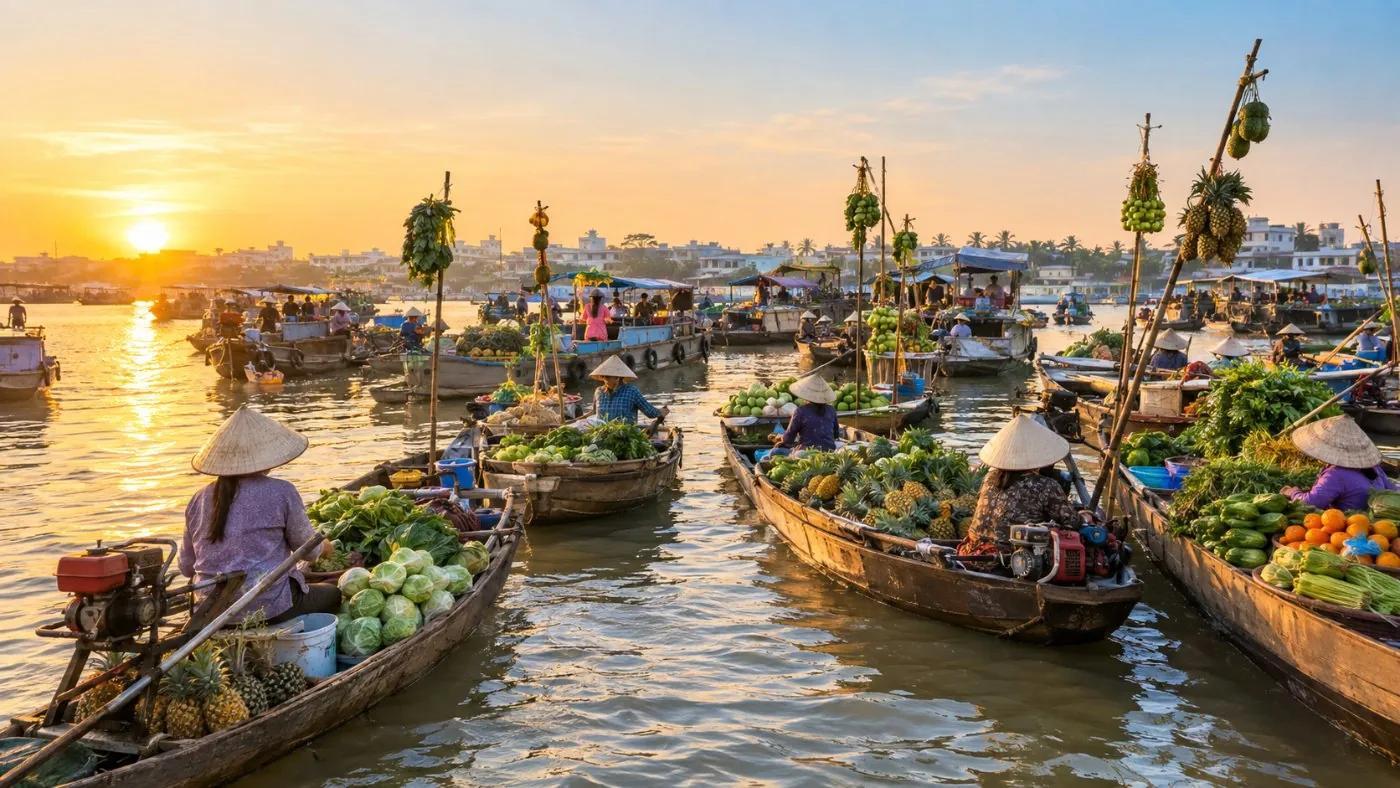
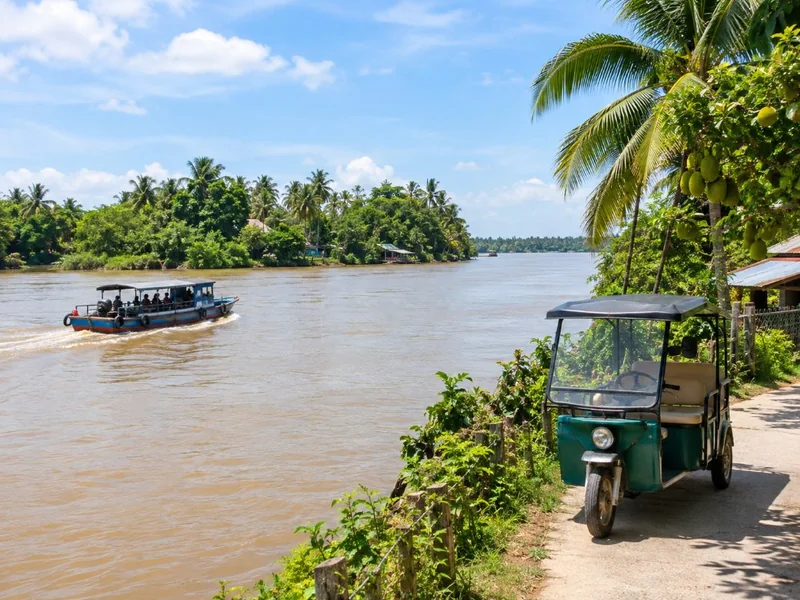
For its waterways, its rice and fruit, and the river life that tours show: sampans, floating markets, orchards and workshops.
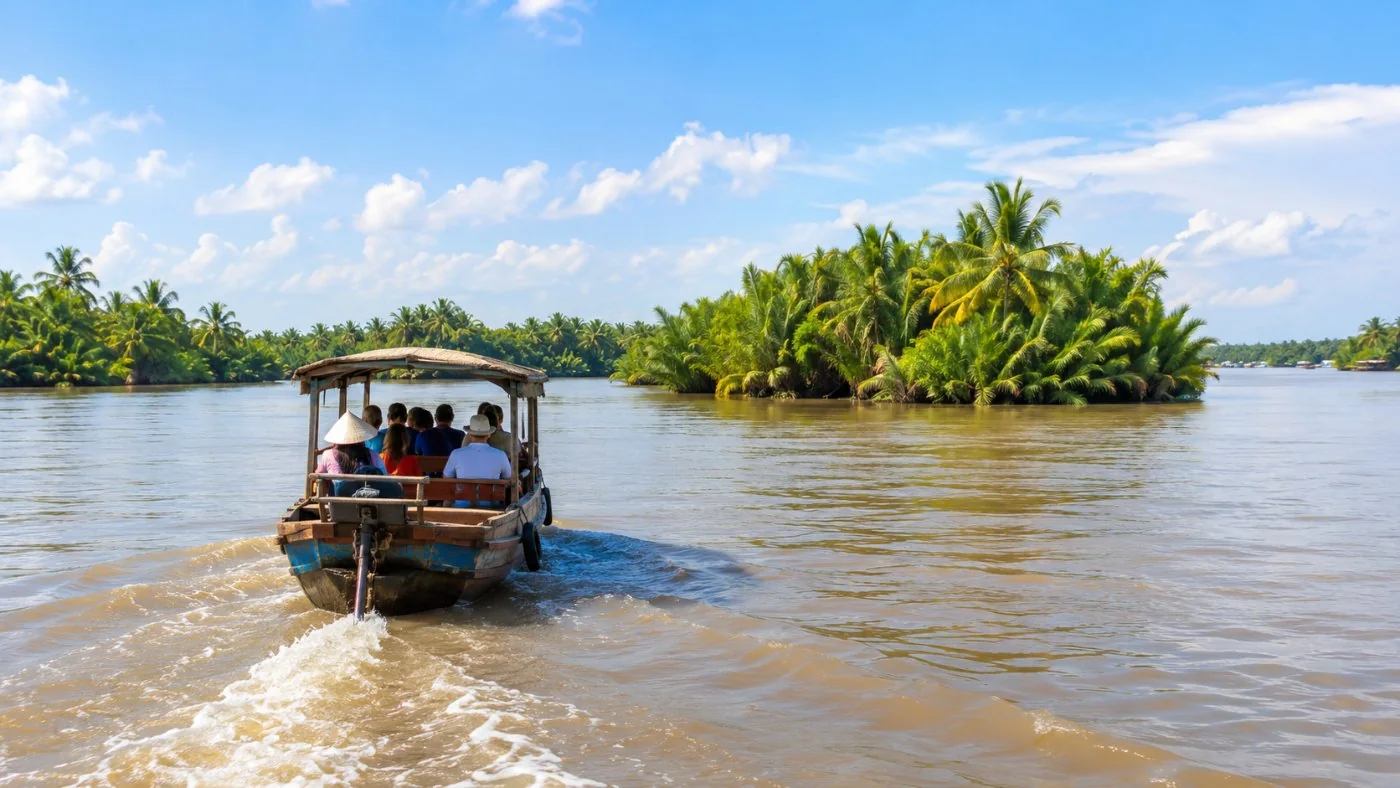
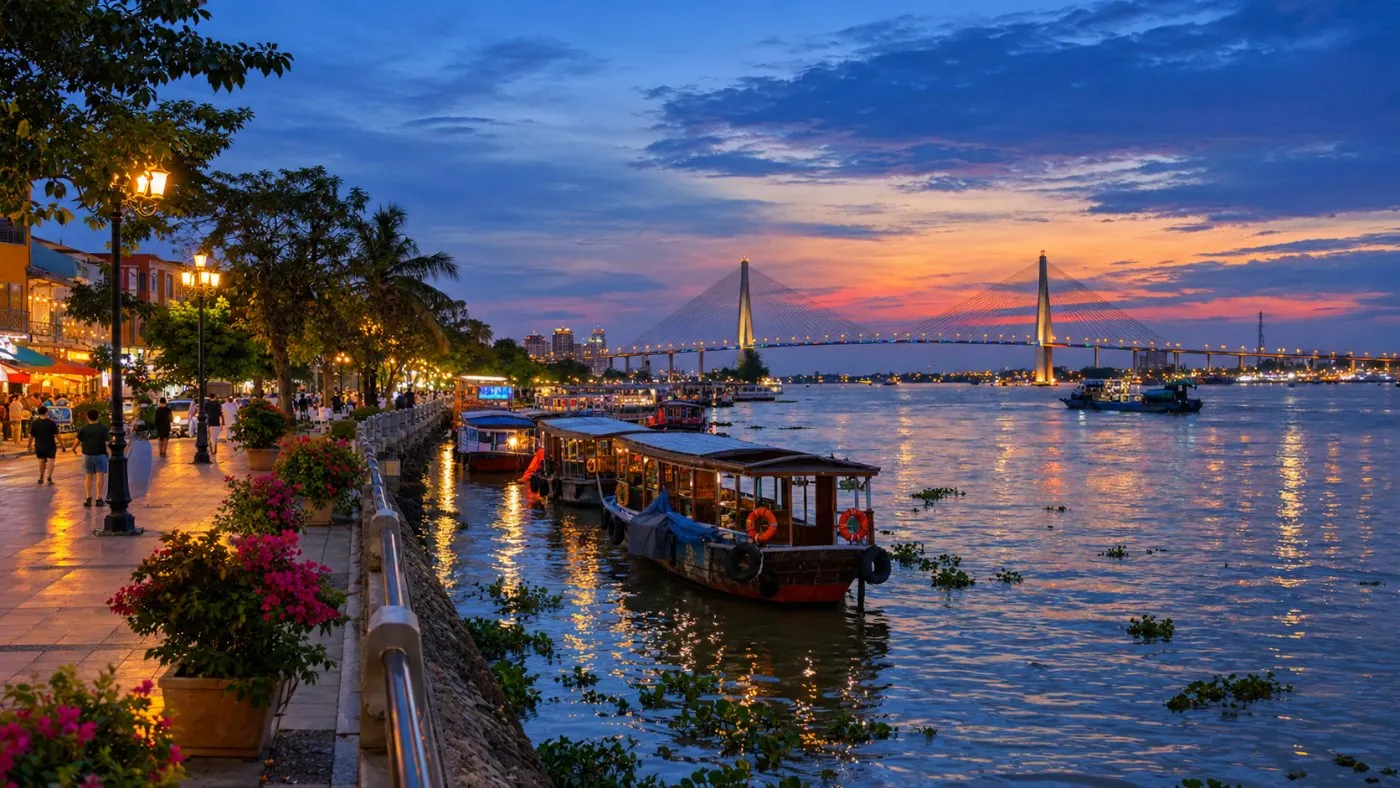
The delta is one of the great rice-growing regions of Asia and the fruit basket of southern Vietnam, criss-crossed by rivers and canals that were its roads for centuries. For visitors, that means palm-shaded canals, island orchards, coconut candy and honey workshops, and in Can Tho a floating market at dawn. The classic day tour shows most of it in one go.
See the delta's islands, orchards and palm canals on the classic day from Ho Chi Minh City.
Book thisIs Ho Chi Minh City in the Mekong Delta?
No. The city belongs to Vietnam's Southeast region; the delta begins south-west of it, about two hours by road to My Tho.
Since the 2025 province merger the map has changed too: My Tho is now the centre of an enlarged Dong Thap province, Ben Tre is part of Vinh Long province, and Can Tho City has absorbed Soc Trang and Hau Giang. The towns keep their names, and so do the tours.
What animals live in the Mekong Delta?
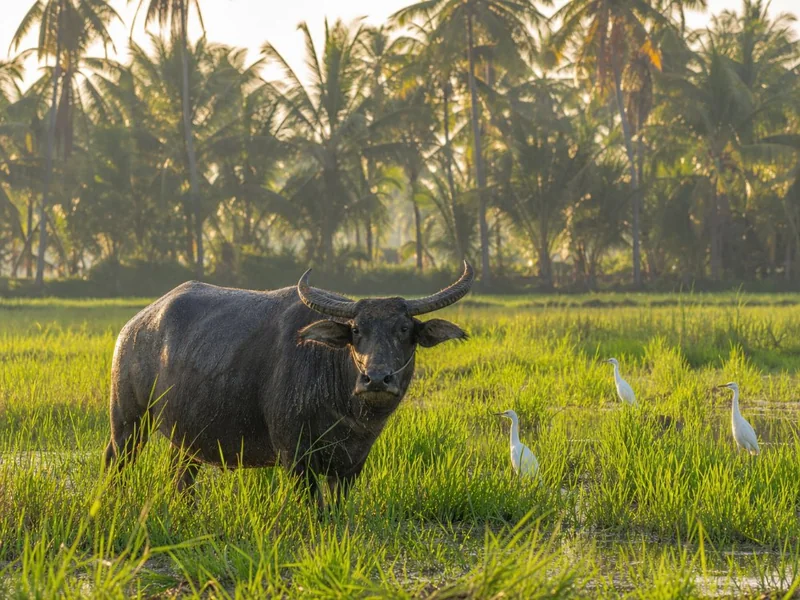
On a tour you will mostly see water buffalo, storks and egrets, bees on the honey farms and fish in the farm ponds.
The Mekong as a whole is one of the world's richest rivers for fish. In the delta itself, most wildlife visitors notice is around farms and canals: buffalo in the rice fields, white egrets, bee farms such as the one on Unicorn Island on the classic day. Forest reserves, such as Tra Su near Chau Doc on the three-day trip, add more birdlife.
Does the Mekong have crocodiles?
Not in the wild in any way you will meet. The wild Siamese crocodile is critically endangered and close to gone from Vietnam's wild; delta crocodiles live on farms.
Crocodile farms exist in the delta, and some itineraries elsewhere include one. The tours on this site do not. On the canals and rivers the only reptiles you are likely to notice are small lizards on the riverside walls.
Is it safe to swim in the Mekong Delta?
It is not a swimming river. The water is thick with silt, currents are strong and the channels are busy with boats.
None of the tours on this site includes a swim, and travel writers note litter in parts of the river. Stay in the boat, wash your hands before eating fruit, and leave swimming for the coast. If you feel unwell after any contact with river water, see a doctor.
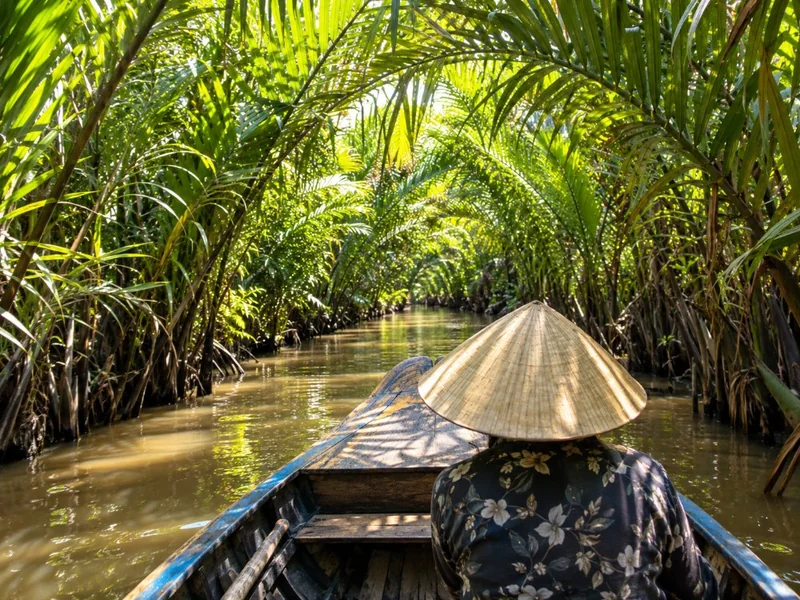
Is a Mekong River cruise worth it?
It depends on the cruise. Multi-night river ships are a separate kind of holiday; for most visitors a day or two of boats from Saigon gives the delta experience.
Cruise ships sail the stretch between southern Vietnam and Cambodia over several nights. They are comfortable but spend long hours on the wide main river. The tours on this site keep you closer to the life of the canals: the speedboat day for a fast river day from the city, the two-day tour for a floating market, and the three-day trip for the overland route to the Cambodian border with an optional boat to Phnom Penh.
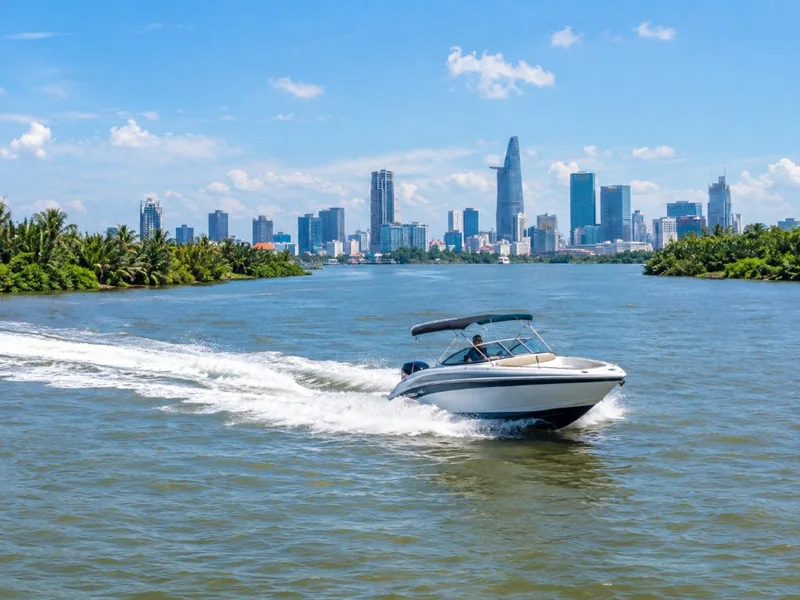
A day on the river without the coach: a speedboat from the city pier to Thu Thua's market and Cao Dai temple.
Book thisFrequently asked questions
How long is the Mekong River?
About 4,350 km, the world's twelfth-longest river and the third-longest in Asia.
What does Cuu Long mean?
Nine Dragons, the Vietnamese name for the Mekong, after the delta's branches.
Can you swim in the Mekong?
It is not a swimming river: strong currents, silt and boat traffic. The tours on this site do not include a swim.
Are there crocodiles in the Mekong Delta?
Not in the wild in a way you will meet; delta crocodiles are kept on farms.
Ready to book
Choose your Mekong tour
Free cancellation up to 24 hours before on every option. Booked on GetYourGuide.
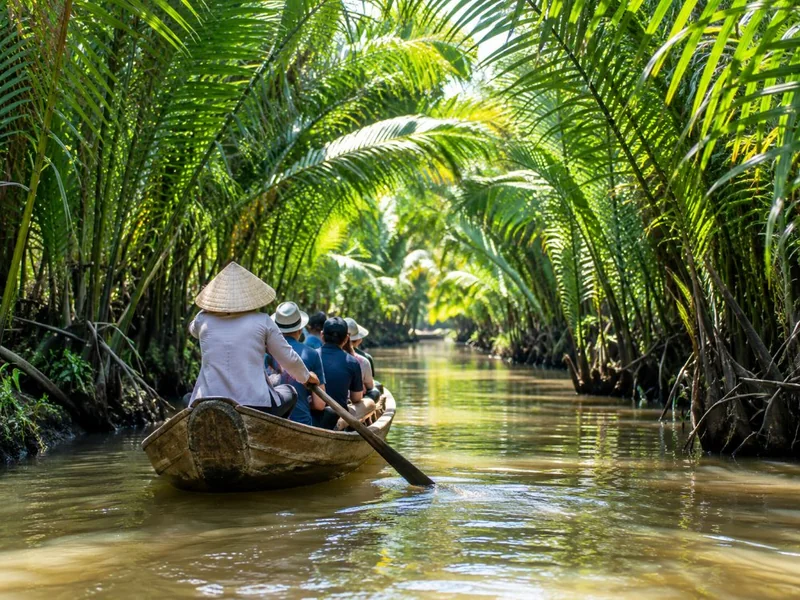
My Tho & Ben Tre: Islands, Sampans & Coconut Village
- Pickup 7 to 8 am from hotels in Districts 1, 3 and 4; about two hours by road to My Tho, back 4:30 to 5 pm
- Motorboat past Dragon, Phoenix and Turtle islands; a bee farm with honey tea on Unicorn Island
- A coconut candy workshop in Ben Tre, a sampan through the canals, a tuk-tuk or electric-car ride and some cycling
Mekong Delta by Speedboat from Saigon
No coach: a speedboat from the city pier into the waterways of Thu Thua, a market, a Cao Dai temple, lunch and a local walk
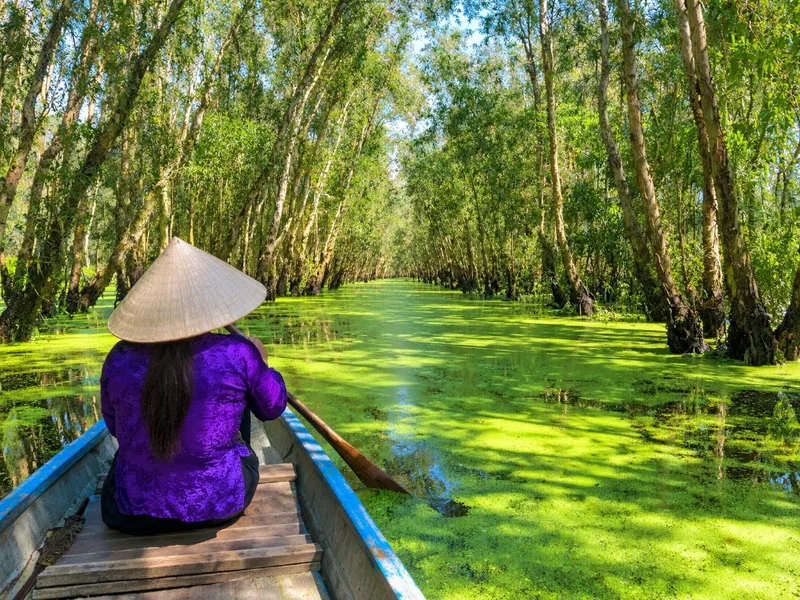
3 Days to Chau Doc, with an Optional Exit to Phnom Penh
The deep delta: Cai Be's orchards on day one, Cai Rang and a Khmer pagoda in Can Tho on day two, then the Tra Su forest and the floating village at Chau Doc near the Cambodian border, with the choice of returning to Ho Chi Minh City or carrying on to Phnom Penh, per the listing.